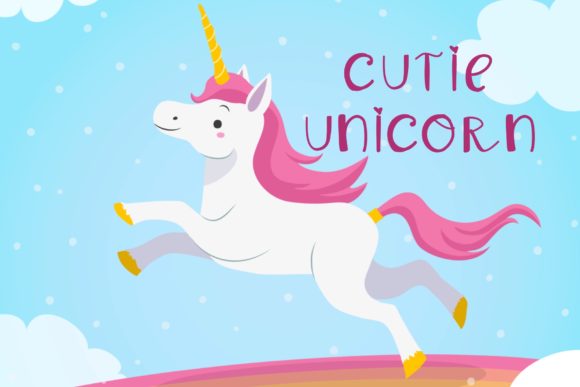
Cutie Unicorn: A Playful Font for Branding Projects
There’s something undeniably charming about a font that feels like it was handcrafted with care and a dash of whimsy. That’s exactly what Cutie Unicorn brings to the table. As I sat down to design a new brand identity for a small boutique, I found myself drawn to this quirky handwritten typeface. It wasn’t just the aesthetic—it was the personality. The font exudes joy, playfulness, and a touch of nostalgia, making it perfect for projects that want to feel warm, inviting, and unique.
A First Impression That Sticks
I started by opening my brand board and sketching out some rough ideas for the boutique’s logo. I wanted something that reflected the shop’s vibe—think cozy, creative, and a little bit magical. When I first tested Cutie Unicorn on a logo draft, I knew I had found something special. The rounded, flowing strokes gave it a friendly and approachable feel, while the subtle quirks in the letterforms added character without being distracting.
It wasn’t just the look that caught my eye—it was how it felt in use. The font has a natural rhythm, almost like it’s writing itself. This made it ideal for creating a sense of movement and energy, which is exactly what I needed for a brand that wants to stand out in a crowded market.
From Logo to Brand Identity
As I moved from the logo concept to developing the full brand identity, I used Cutie Unicorn in several key areas. For the logo itself, I paired it with a clean sans serif font to balance the playful nature of the handwriting. This contrast helped create visual harmony while ensuring readability at different sizes and contexts.
In the packaging design, I used Cutie Unicorn for the main product names and taglines. The font worked beautifully on labels, adding a personal touch that felt genuine and authentic. I also used it for social media graphics and website headers, where its charm translated well into digital formats. On Instagram posts and promotional banners, it brought a sense of warmth and personality that resonated with the target audience.
One thing I noticed early on was how well Cutie Unicorn handled short-form text. Whether it was a product title, a call-to-action, or a tagline, the font maintained clarity and appeal. However, I did find that it wasn’t ideal for long blocks of text. Its playful style works best as a display font or headline font, rather than for body copy or lengthy content.
Font Pairing and Design Flexibility
When considering font pairing, I explored several options to complement Cutie Unicorn. A modern sans serif font like Montserrat or Lato provided a strong contrast, helping to balance the whimsical nature of the handwritten style. For more script-heavy designs, I paired it with another elegant script font to create a cohesive yet dynamic typographic palette.
What I loved most about Cutie Unicorn was its versatility. It could be used as a logo font, an accent font, or even as part of a supporting typeface in a larger brand system. I also appreciated the included styles and alternates, which allowed me to experiment with different weights and variations to suit various design needs.
Testing the font across multiple platforms and mediums was crucial. I checked how it looked on business cards, signage, and web banners. In each case, it maintained its charm and readability, proving to be a reliable choice for both print and digital applications.
Practical Advice for Real-World Use
If you’re considering using Cutie Unicorn for your own branding project, there are a few things to keep in mind. First, always test the font in different contexts before committing to it in a full brand system. How does it look on a shop sign? How does it perform on a website header? These questions can help you determine whether it’s the right fit for your project.
Also, make sure to review the font’s licensing terms and file formats. If you’re working on a commercial project, you’ll want to ensure that the font is properly licensed for use in all intended materials. Cutie Unicorn comes with clear guidelines for commercial use, which is a big plus for designers who work with clients.
Finally, don’t be afraid to experiment. The playful nature of Cutie Unicorn means it can be adapted to many different design styles. Whether you’re creating a minimalist brand identity or a vibrant, colorful package design, this font has the potential to elevate your work in unexpected ways.
The Final Touch
By the end of the project, Cutie Unicorn had become an essential part of the brand’s visual language. It added a layer of personality and warmth that helped the boutique stand out in a competitive market. From the logo to the packaging, from the website to the social media assets, the font consistently delivered on its promise of joy and charm.
For any designer looking to add a touch of playfulness to their work, Cutie Unicorn is worth exploring. It’s not just a font—it’s a statement. And in a world where branding is all about connection, that’s a powerful tool to have in your arsenal.